



Natural Response Baby Bottles for Baby-Led Feeding
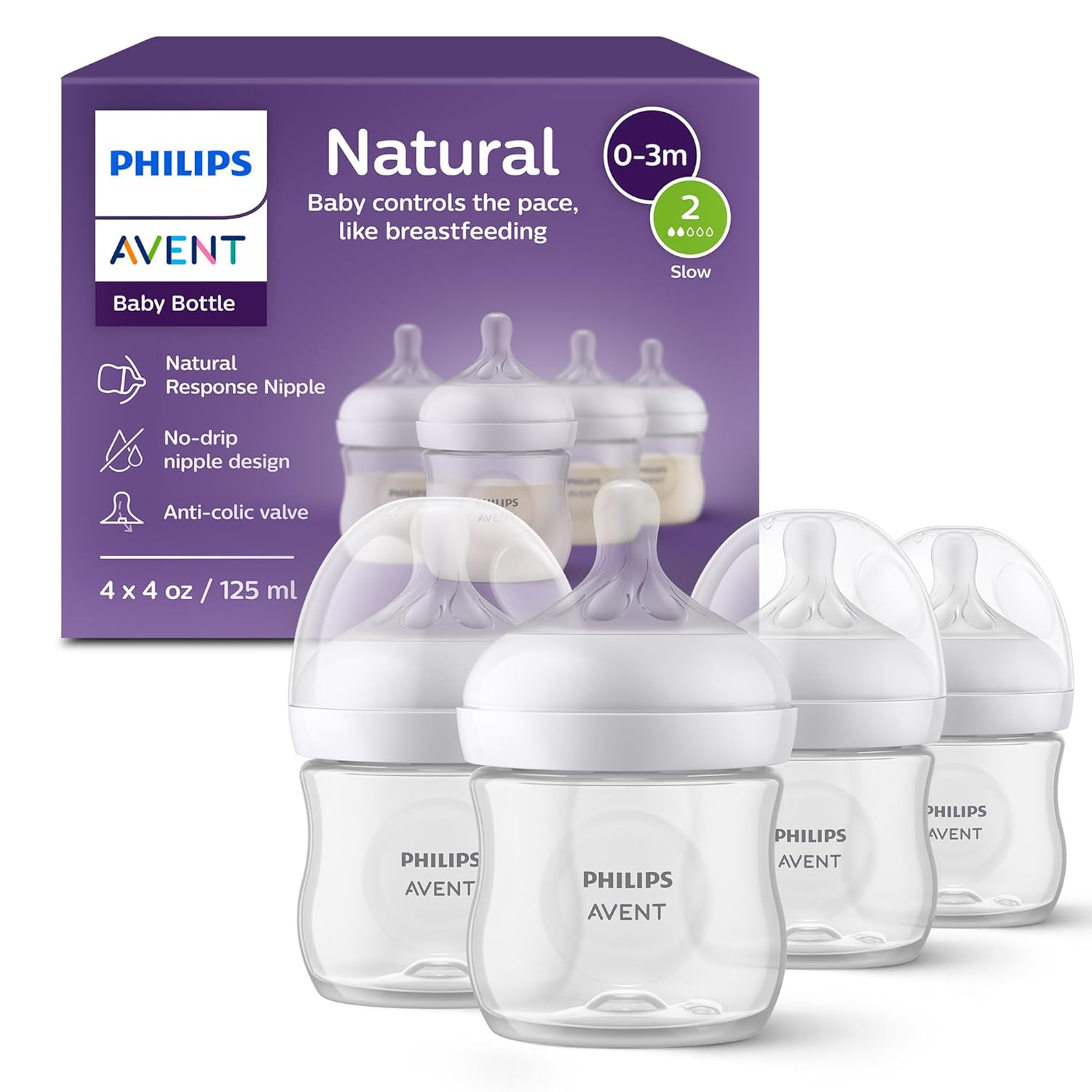
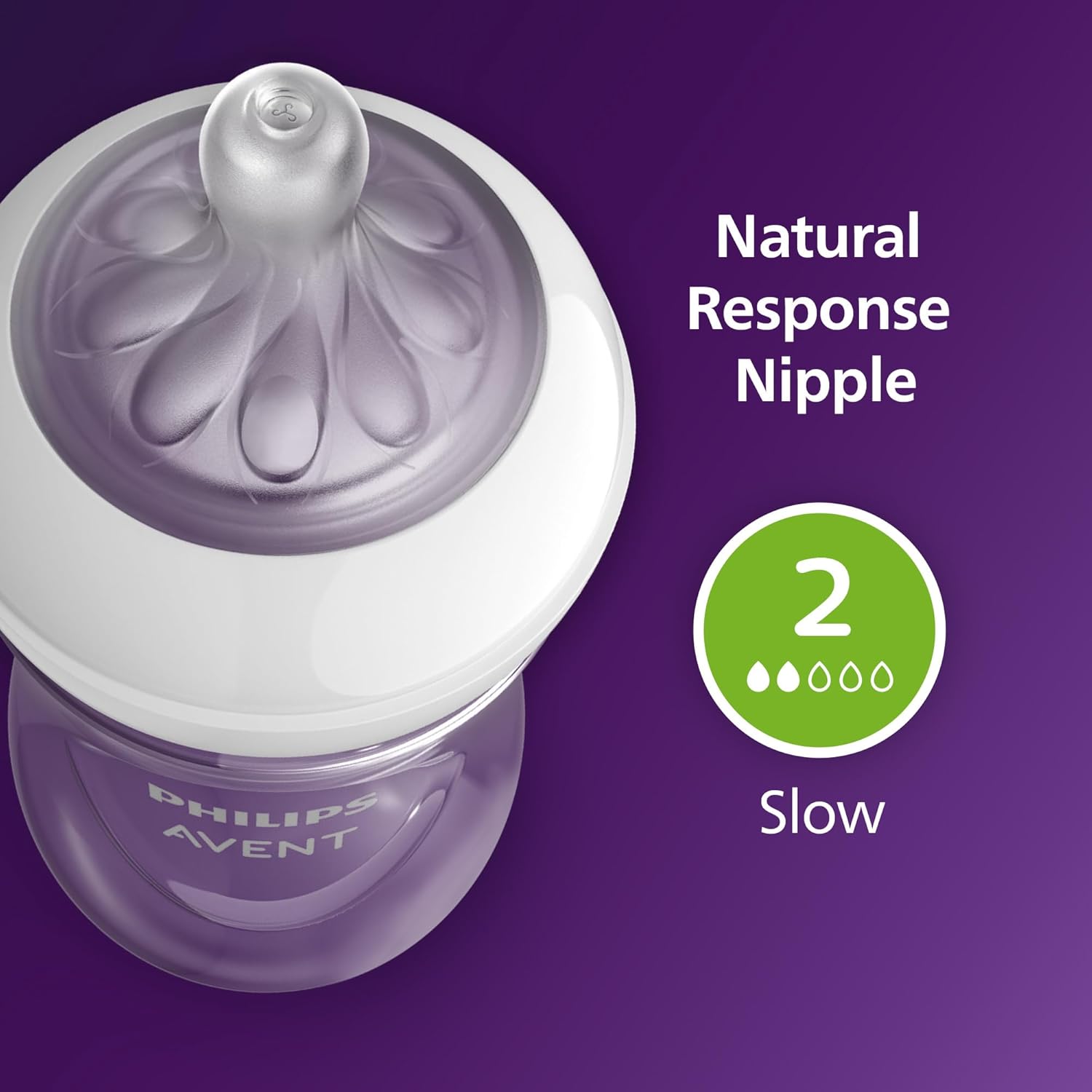
Philips Avent Natural Response Baby Bottles are designed to let babies control the pace of milk flow during feeding. This set includes four 4 oz bottles with slow-flow Flow 2 Natural Response nipples. The nipple releases milk when a baby actively drinks and pauses the flow when the baby stops to swallow or breathe, supporting a feeding rhythm similar to breastfeeding. Its wide, soft, and flexible shape is designed to support a comfortable latch, making the bottles a practical option for families combining breast and bottle feeding.
Why Parents Like It
The Natural Response nipple is the central feature of these Philips Avent bottles. Rather than allowing milk to flow continuously, its opening responds to active drinking, giving the baby greater control over the feeding pace. A no-drip design helps reduce spills and lost milk, while an anti-colic valve integrated into the nipple is designed to direct air away from the baby’s tummy. The bottles are made from BPA-free polypropylene, and their ergonomic shape is comfortable for caregivers to hold while also being easy for small fingers to grasp as babies develop.
Everyday Use
Each Philips Avent bottle holds 4 ounces and comes with a slow-flow Flow 2 nipple. The wide bottle neck makes filling and cleaning more straightforward, while the limited number of parts helps simplify assembly. The bottles are compatible with nipples and caps from the Natural Response range, allowing the feeding setup to adapt as a baby’s drinking pattern changes. Philips Avent notes that age is only a guide when selecting nipple flow; feeding cues and the baby’s individual drinking style should also help determine whether a different flow rate is appropriate.
Care & Practical Considerations
Babies may need time to adjust to a Natural Response nipple, particularly when moving from another bottle design. Philips Avent notes that it can take two or three attempts for some babies to learn how to get milk flowing. Assemble, clean, and use each bottle according to the manufacturer’s instructions, and inspect nipples and bottle components regularly for wear or damage. If feeding difficulties persist, seek guidance from an appropriate healthcare professional.


