


Key Highlights
- The mother-son bond is backed by science: cells from your son remain in your body for decades, making the connection literally part of you.
- A strong mother-son relationship shapes emotional health, academic success, and how sons view women and masculinity throughout their lives.
- Teenage distance is normal development, not rejection. The key is giving space while staying consistently available.
- Small everyday moments like meals together, car conversations, and bedtime check-ins build stronger bonds than grand gestures or perfect activities.
- The relationship evolves from childhood dependence to teenage independence to adult friendship, but a mother’s influence remains powerful at every stage.
I still remember the morning my oldest son, then fourteen, shuffled into the kitchen before school. His hair was sticking up in three directions, and he wore that sleepy, grumpy look teenagers perfect so well. But when I handed him his favorite breakfast, he paused, looked at me with suddenly clear eyes, and said, “Thanks, Mom. You always know what I need.” Then he was gone, backpack bouncing, leaving me standing there with tears in my eyes over something so small.
That moment reminded me of what I had been learning through all the eye rolls, the closed bedroom doors, and the one-word answers: the bond between a mother and her teenage son doesn’t disappear. It just changes shape.
Raising teenage boys is like trying to hug a cactus sometimes. They need you desperately but won’t always admit it. They want independence but still need guidance. They’re becoming men, but they’re still your little boys. As mothers, we often wonder if we’re still getting through to them, if our words still matter, if they still need us the way they once did. The truth is, they do.
They need us differently than before, and maybe even more urgently, as they navigate the confusing years between childhood and adulthood. Understanding how to keep that connection strong during these challenging teenage years might be one of the most important things we do as mothers.
- Chapter 1: Understanding the Mother-Son Bond
- Chapter 2: Impact Of The Mother-Son Relationship On The Son's Growth
- How does the mother-son relationship impact a son's emotional development and mental health?
- How do mothers help build their sons' self-confidence and identity?
- How do mothers shape their sons' perceptions of women?
- How do mothers help their sons resist peer pressure?
- How can mothers teach their sons a healthy view of masculinity?
- Chapter 3: Ways to Nurture and Strengthen the Bond
- Chapter 4: Navigating the Changing Mother-Son Relationship
- The Journey Continues
- Frequently Asked Questions
Chapter 1: Understanding the Mother-Son Bond
What Makes The mother-son bond So Strong?
The connection between mothers and sons begins before birth and grows into something powerful and lasting. From the moment a mother first holds her baby boy, she becomes his first teacher, his first friend, and his first example of love. For a son, his mother is often the first woman he ever loves, and that early attachment shapes how he sees relationships for the rest of his life.
This bond stays strong because mothers offer their sons something unique. We provide a safe space where they can be vulnerable without judgment. When the world tells boys to be tough and hide their feelings, mothers create a place where tears are okay and fears can be shared. Even when our teenage sons tower over us and pretend they don’t need hugs anymore, they know deep down that mom’s love is unconditional and unwavering.
There’s a fascinating scientific discovery that explains this deep connection on a biological level. During pregnancy, cells from a baby boy actually cross into his mother’s body and stay there for decades, sometimes for her entire life. Scientists call this fetal microchimerism. These cells from our sons become part of our hearts, brains, and other organs.
When mothers say “he’s part of me,” it’s not just a figure of speech. Some researchers believe these cells might even help protect mothers from certain diseases and help our bodies heal. It’s as if our sons continue taking care of us at a cellular level, long after they’ve grown up and moved away.
Beyond microchimerism, other research shows that boys who have strong relationships with their mothers tend to be more emotionally healthy, do better in school, and form better relationships later in life. The trust and security we build with our sons doesn’t just make them feel good. It actually helps their brains develop in positive ways. This biological reality mirrors what we feel emotionally: once you become a mother to a son, that connection becomes woven into the very fabric of who you are.
Key Traits That Make the Connection Special
Several qualities make the mother-son relationship truly one of a kind. First, there’s the element of mystery. Mothers are raising someone of a different gender, which means we’re constantly learning about a whole different way of seeing the world. This difference keeps us curious about them and keeps them curious about our perspectives too.
Trust forms another cornerstone of this bond. When a teenage boy trusts his mother, he has someone to confide in about everything from friendship drama to questions about growing up. My younger son once told me that talking to me feels different from talking to his dad because he knows I won’t try to immediately fix everything.
Protection and nurturing also define this relationship, though it evolves as sons grow. When they’re little, we protect them from scraped knees and bad dreams. As teenagers, we protect them by teaching them to make good choices and helping them navigate peer pressure. Even when they act like they don’t want our help, they notice when we show up.

How Does the Mother-Son Relationship Stand Out from Other Family Bonds?
The mother-son relationship occupies a unique space in family dynamics. Unlike the father-son connection, which often centers on teaching masculinity and independence, the mother-son bond tends to emphasize emotional connection and understanding. While dads might show love through playing catch or teaching practical skills, moms often connect through conversations, emotional support, and creating a sense of home.
This relationship also differs from sibling bonds because it carries an element of unconditional acceptance that siblings don’t always offer each other. Brothers and sisters compete, tease, and challenge each other. But a mother’s love remains steady regardless of achievements or failures.
Grandparents, aunts, and uncles provide wonderful support, but the mother-son bond carries a depth that comes from being the primary caregiver during those crucial early years. This daily involvement creates countless small moments that build into something irreplaceable.
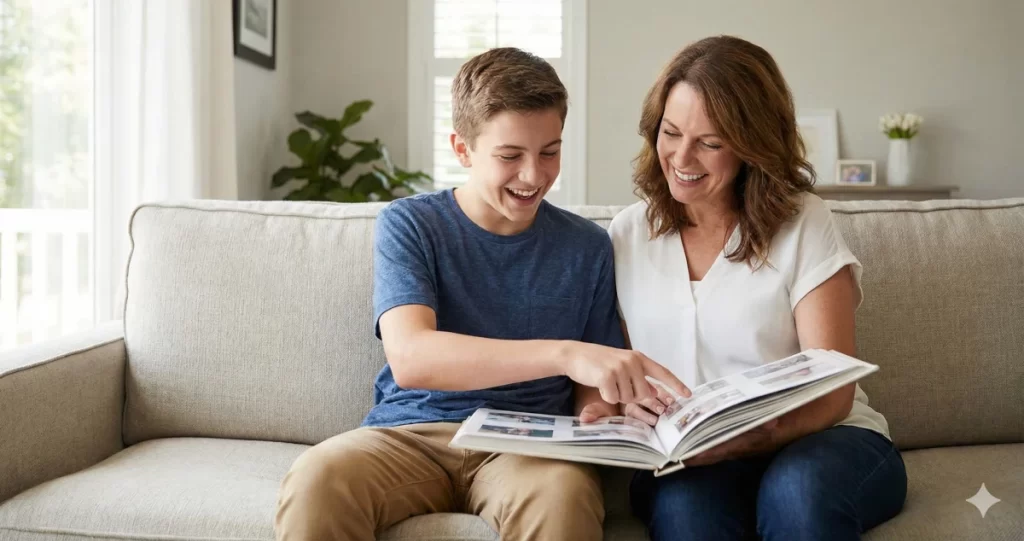
Chapter 2: Impact Of The Mother-Son Relationship On The Son’s Growth
How does the mother-son relationship impact a son’s emotional development and mental health?
A mother’s influence on her son’s emotional world is enormous. Boys who feel connected to their mothers learn that emotions aren’t something to fear or hide. When we validate feelings by saying things like “I can see you’re really frustrated right now,” we’re teaching our boys to recognize and articulate their inner experiences. This skill becomes crucial as they navigate teenage friendships, academic pressure, and eventually romantic relationships.
The mental health benefits extend far into adulthood. Studies consistently show that men who had strong relationships with their mothers during childhood and adolescence experience lower rates of depression and anxiety. They’re also more likely to seek help when they’re struggling, rather than suffering in silence. In a world where men face alarming rates of suicide and untreated mental illness, a mother’s role in teaching emotional awareness becomes lifesaving.

How do mothers help build their sons’ self-confidence and identity?
A mother’s voice becomes part of her son’s internal dialogue. When we notice his strengths, acknowledge his growth, and remind him of past successes, we’re building a reservoir of self-belief he can draw from during tough times. Building confidence doesn’t mean empty praise. Boys can tell the difference between genuine recognition and hollow compliments. Specific, honest feedback builds real confidence because it’s grounded in truth.
Mothers also help sons develop identity by accepting them as they are, not as we imagined they’d be. Maybe your son loves theater instead of sports, or prefers quiet reading to loud parties. When we embrace their authentic interests and personalities, we give them permission to be themselves. This acceptance becomes their anchor during the teenage years when peer pressure pushes them to conform.

How do mothers shape their sons’ perceptions of women?
A mother is often the first and most influential woman in her son’s life, and how he sees her shapes how he’ll view women throughout his life. When mothers demonstrate competence, intelligence, and strength, sons learn that women are capable and deserving of respect. When we stand up for ourselves and refuse to be treated poorly, we teach our sons that women have boundaries that must be honored.
Sons watch how we talk about other women, whether we lift them up or tear them down. They notice whether we support female colleagues and friends or engage in competition and gossip. Mothers can actively shape positive perceptions by calling out disrespectful attitudes when they appear. If your son makes a dismissive comment about girls or women, address it directly. These conversations might feel uncomfortable, but they’re essential in raising sons who see women as equals.
How do mothers help their sons resist peer pressure?
Strong mother-son relationships create a protective buffer against negative peer influence. When boys feel securely connected to their mothers, they’re less likely to make poor choices just to fit in with friends. That connection gives them an internal compass that helps them navigate tricky social situations.
Mothers help by keeping lines of communication open without judgment. If your son knows he can tell you about difficult situations without facing immediate punishment, he’s more likely to seek your guidance when it really matters. We also build resistance to peer pressure by helping our sons develop strong personal values. Talk about what your family stands for, why certain behaviors are harmful, and how to politely decline when friends pressure them. Role-play scenarios so they have practiced responses ready.
How can mothers teach their sons a healthy view of masculinity?
One of the most important gifts mothers give their sons is permission to be fully human, which means embracing a masculinity that includes tenderness, vulnerability, and emotional depth alongside strength and courage. Too often, boys receive narrow messages about what it means to be a man. Mothers can counter these limiting stereotypes.
Celebrate the full range of masculine traits. Strength isn’t just physical power but also the courage to stand up for what’s right, to admit mistakes, and to ask for help. Real men cry when they’re sad, laugh when they’re happy, and aren’t afraid to show affection. Point out positive male role models in your son’s life, whether that’s a teacher who shows kindness or a family member who balances career success with being present for his children. Equally important, call out toxic masculine behavior when you see it, explaining why those attitudes are harmful to everyone.

Chapter 3: Ways to Nurture and Strengthen the Bond
The Role of Early Childhood Experiences
The foundation of a strong mother-son bond is built in those early years. Every bedtime story and scraped knee kissed better creates deposits in an emotional bank account that you’ll draw from throughout his life. These seemingly small moments teach your son that he can count on you, that his needs matter, and that love is reliable.
Consistent presence matters more than perfection during these early years. Your son doesn’t need a Pinterest-perfect childhood. He needs you to be there, to respond when he calls, and to celebrate his small victories. The attachment style formed in early childhood often predicts the relationship quality in adolescence. But here’s the good news: even if the early years were rocky, relationships can be repaired and strengthened at any stage.
Everyday Activities for Growing a Lasting Connection
Building a strong bond doesn’t require grand gestures or expensive outings. The most meaningful connections often happen during ordinary, everyday activities. The key is being fully present during these moments rather than distracted by phones or racing through them.
Meals together, bedtime check-ins, shared hobbies, and even chores can become bonding time. The activity itself matters less than the time spent side by side. My younger son and I bond over baking cookies, while my older son and I connect through reading together and listening to podcasts together on long drives. Quality time means being mentally and emotionally present, not just physically in the same room. Even fifteen minutes of fully focused attention creates more connection than hours of distracted presence. For busy mothers, protect certain times as non-negotiable touchpoints that give your son predictable access to you.
How to Improve Communication with Your Son
Good communication with sons requires understanding that boys often communicate differently. Many boys are less verbal and need time to process before they’re ready to talk. Timing matters enormously. Right after school is usually terrible for deep conversations. Late afternoon or evening, after they’ve had time to unwind, often works better.
The setting also affects communication. Many boys open up better during activities rather than formal sit-down talks. Try talking while shooting hoops, during car rides, or while cooking together. Ask better questions. “How was school?” gets you “fine.” Instead try “What made you laugh today?” or “What was the most annoying thing that happened?” And when he does share something, resist the urge to immediately problem-solve or lecture. Sometimes he just needs you to listen and validate his feelings.

Chapter 4: Navigating the Changing Mother-Son Relationship
How the Mother-Son Bond Evolves Through Childhood, Adolescence, and Adulthood
The mother-son relationship transforms dramatically as boys move through different life stages. During early childhood, the relationship is intensely close. Your son sees you as the center of his universe. The shift begins around ages eight to ten, when boys start seeking more independence and looking toward their peer group for validation.
Adolescence brings the most dramatic changes. Teenage sons often become moody and uncommunicating. The boy who once told you everything now answers questions with grunts. This phase tests every mother’s patience, but it’s temporary and necessary. He’s figuring out who he is separate from you. Young adulthood typically brings a reconnection. As sons mature into their twenties and beyond, many rediscover appreciation for their mothers. The relationship becomes more balanced, shifting from caretaker and dependent to two adults who genuinely enjoy each other’s company.
Maintaining Connection During the Teenage Years
The teenage years are when mothers most worry about losing their sons. The secret to staying connected during adolescence is giving him space while remaining consistently available. Think of yourself as a home base. He needs to run far away to explore, but he also needs to know exactly where home base is when he needs to return for safety.
Stay interested without being intrusive. Keep showing up for the things that matter to him, even when he acts like he doesn’t care whether you’re there. Attend his games or competitions. Be present at family dinners even if he barely speaks. These consistent acts communicate that he matters to you regardless of how he’s behaving. Find new ways to connect that respect his growing maturity. Treat him more like an adult, asking his opinions on real topics rather than just monitoring his homework.
Physical affection often decreases during these years, but the need for connection doesn’t disappear. Respect your son’s changing comfort level, especially in public. At home, you can usually maintain more physical connection. Find ways that feel comfortable: a quick hug before school, a hand on the shoulder when he’s stressed, or high-fives for accomplishments. Don’t completely stop offering affection just because he sometimes pulls away.

Respecting Boundaries While Staying Close
One of the trickiest balancing acts is respecting a son’s growing need for boundaries while maintaining emotional closeness. Boundaries are healthy, not rejection. When your teenage son closes his bedroom door or asks for privacy, he’s practicing setting limits, a crucial life skill.
Have explicit conversations about boundaries. Ask your son what privacy he needs and what involvement he still wants from you. Establish which areas are non-negotiable (safety issues, illegal activities, serious health concerns) and which allow for privacy (personal conversations with friends, minor social dramas). Check in regularly but gently. A simple “I’m here if you need me” reminds him you’re available without pressuring him to share.

How can mothers support their sons during difficult life transitions?
Life transitions hit teenage boys particularly hard. Moving to a new school, parents divorcing, losing a loved one, failing at something important, or experiencing heartbreak all shake a young man’s foundation during an already unstable time. During these difficult transitions, your presence matters more than your words. Boys going through hard times often don’t want advice or platitudes. They need to know you’re there, you’re steady, and you’re not going anywhere.
Validate his feelings without trying to fix everything. When my older son didn’t make the team he’d worked hard for, what he actually needed was for me to acknowledge that this hurt. “This really sucks, and I’m so sorry” helped more than any silver lining I could offer. Maintain routines and normalcy as much as possible during transitions. When a son’s world feels chaotic, the predictability of regular meals and normal family activities provides stability. Watch for signs that a transition has become too overwhelming, like prolonged withdrawal or declining grades, and don’t hesitate to seek professional help when needed.
The Journey Continues
Last week, my younger son came home from school and actually sat down at the kitchen table to talk. Not because I asked, not because something was wrong, but just because he wanted to. It was maybe fifteen minutes, nothing earth-shattering, but as he headed to his room, he paused. “Thanks for listening, Mom,” he said, and then he was gone.
These are the moments that make everything worthwhile. Not the big milestones, but these small exchanges that say “we’re still connected” even when the teenage years try to pull us apart.
The mother-son bond requires constant attention and adaptation. There will be days when your son seems like a stranger, when you wonder if anything you’re doing matters. On those days, remember that your presence alone is powerful. Remember that teenage distance is temporary, but the love between a mother and son is permanent.
So keep showing up. Keep loving him through the eye rolls and the moments when he acts like he doesn’t need you. Because one day, he’ll be a grown man who remembers that you were there, that you never gave up, that your love was his one constant.

Frequently Asked Questions
What are some ways to strengthen the bond between a mother and son?
To strengthen the son bond, focus on spending quality time together, offering emotional support, and being a positive influence. Activities like reading, playing sports, or just talking openly build a secure connection, which aligns with attachment theory, creating a lasting relationship.
How can a mother nurture her relationship with her son as he grows older?
As a son gets older, nurture the mother-son relationship by respecting his independence while maintaining effective communication. Offer emotional comfort by being a trusted listener. This evolves the bond into a strong friendship that positively influences his future relationships with other family members and partners.
What are Some Books recommended for enhancing mother-son Bond and understanding
Three standout books for enhancing mother-son connection and understanding include Strong Mothers, Strong Sons by Meg Meeker, M.D., which offers concise, actionable advice on meeting boys’ unique emotional needs and a mother’s vital role in building resilient young men; Boy Mom: What Your Son Needs Most from You by Monica Swanson, sharing relatable stories and tips from raising multiple boys to nurture emotional closeness through presence and honest parenting; and Mother & Son: The Respect Effect by Emerson Eggerichs, which shows how respect alongside love opens a son’s heart with research-backed methods, testimonies, and strategies for deeper bonds, especially with teens.







Leave a Reply