


If you’ve ever watched your teenager scramble to finish homework at midnight or panic before a big test, you’re not alone. I’ve seen it firsthand with my own kids—and felt that same mix of frustration and worry as a parent. The teen years are full of distractions, pressure, and growing independence, which makes managing schoolwork feel like an uphill battle.
But here’s the good news: a clear, personalized study plan for teenagers can completely shift the dynamic. Instead of late-night cramming or last-minute chaos, a solid plan gives teens structure, confidence, and control over their time. And for us parents? It means fewer arguments, more peace, and a real sense of progress.
In this guide, I’ll walk you through the simple steps to create a study plan that works—one that’s realistic, flexible, and built around your teen’s needs and lifestyle. Let’s get started.
- What is a study plan?
- Why Study Plans Are Game-Changers for Teenagers
- Key Challenges Faced by Teenagers in Organizing Study Time
- Beginner's Guide: What You'll Need to Create an Effective Study Plan
- Step-by-Step Process to Build a Personalized Study Plan
- Step 1: Assess Internal Factors (Goals, Learning Style, and Study Preferences)
- Step 2: Analyze External Factors (Schedule, Commitments, and Constraints)
- Step 3: Calculate Realistic Study Time Requirements
- Step 4: Design a Realistic and Flexible Study Schedule
- Step 5: Incorporate Breaks And Time For Hobbies and Other Activities
- Step 6: Implement The Study Plan And Revise If Needed
- Conclusion
- Frequently Asked Questions
What is a study plan?
A study plan is more than just a homework checklist—it’s a structured roadmap that helps your teenager manage their time, track goals, and stay focused across subjects and deadlines. Unlike a daily to-do list, a study plan takes a bigger-picture approach, usually organized by week or month, and includes time blocks for review, test prep, and even breaks.
So, what is a study plan in real terms? It’s a written or digital schedule that outlines when, what, and how your teen will study. It covers academic priorities, extracurriculars, and personal needs. It’s tailored to their learning style—whether that means early-morning sessions for a focused kid or evening reviews for a night owl.
A good study plan includes:
- Time blocks for each subject or task
- Built-in breaks to avoid burnout
- Buffer time for catch-up or unexpected assignments
- Tools like Google Calendar, MyStudyLife, or even a paper planner
For example, instead of saying “Study math this week,” the plan might say: “Tuesday, 5:30–6:15 PM – Algebra Chapter 3 practice problems.”
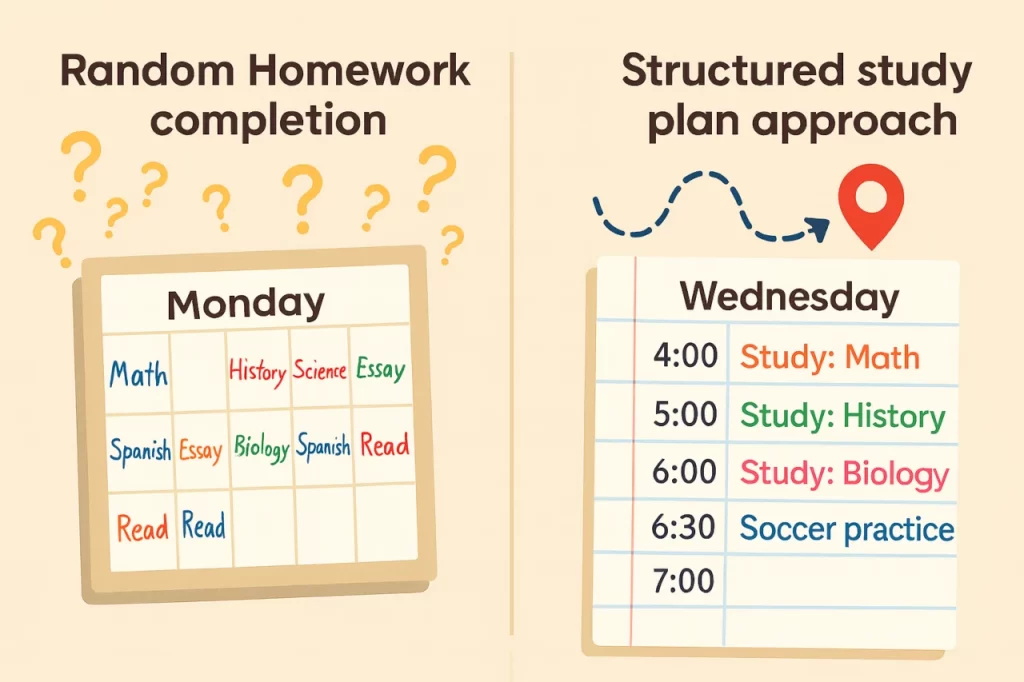
This structure keeps your teen from falling behind—and gives you both a clear way to measure effort and progress.
Why Study Plans Are Game-Changers for Teenagers
Teenagers are still learning how to manage time, handle stress, and take responsibility for long-term goals. Their brains are wired for growth, but not always for planning. That’s where study plans make a real difference.
One of the biggest benefits of study plans for teens is that they shift the focus from reactive to proactive learning. Instead of scrambling to study the night before a test, teens with a plan know exactly what to review—and when.
Here’s what a strong study plan changes:
- Better grades: Structured review time means no more “I forgot we had a quiz.” A teen who reviews 15 minutes daily for science will retain more than one who crams for hours once a week.
- Less stress: Clear schedules reduce the mental load of juggling homework, sports, and social life. A weekly overview using tools like Notion, Trello, or a printable template helps teens visualize tasks early.
- Improved time management: Time blocking teaches real-world planning. For example, using Google Calendar, teens can color-code study blocks by subject and set reminders to stay on track.
- More independence: A personalized study plan encourages teens to take ownership. Parents shift from nagging to supporting—“What’s on your plan today?” becomes a check-in, not a fight.
These aren’t just school skills—they’re life skills. Teens who build routines around priorities are more likely to handle deadlines, avoid burnout, and build confidence in their own abilities.
When a study plan becomes a habit, school becomes more manageable—and the whole household feels it.
Key Challenges Faced by Teenagers in Organizing Study Time
Most teens want to do well—but they often struggle to manage their time without help. The biggest teenage study challenges come from two places: distractions and competing priorities.
Internal Distractions and Focus Challenges
Many of the hardest teenage distractions studying come from the inside—things like phone use, gaming, procrastination, or simply zoning out. Even when they want to focus, teens often struggle to stay on track for more than a few minutes at a time.
Start by helping your teen notice their triggers. Are they reaching for their phone every 10 minutes? Do they avoid subjects they find hard or boring?
Here are practical ways to support better focus:
- Set screen boundaries: Use phone settings or apps like Stay Focused to block distracting apps during study hours.
- Keep the workspace clear: A cluttered desk adds mental noise. A clean space = less temptation.
- Use short timed sessions: Try 20-minute study bursts followed by 5-minute breaks using a simple kitchen timer or a sand hourglass—no tech needed.
- Start with the hardest task: Tackling one tough subject early in the session builds momentum and confidence.
💡 Pro Tip
Teens often confuse boredom with burnout. Make sure they’re sleeping enough and not overbooked—no study plan works if they’re running on empty.
External Time Conflicts and Competing Priorities
Most teens today aren’t just students—they’re athletes, performers, volunteers, part-time workers, or caretakers for younger siblings. When you add in social life and screen time, balancing school and extracurriculars becomes a real challenge.
Without a system, something always gives—and it’s usually study time.
That’s why planning needs to include everything, not just homework. A realistic study plan wraps around your teen’s full life, not just their schoolwork.
Start with a full weekly time map:
- Block out non-negotiables: school hours, sports practice, family events
- Add in flexible time: social outings, hobbies, downtime
- Identify true open study blocks (not overlapping with meals, travel, or fatigue)
Helpful tools and strategies:
- Use a large whiteboard or wall calendar to give your teen a bird’s-eye view of the week
- Try Timeular or Toggl Track for teens to track where their time actually goes
- Build buffer time around packed days to avoid overload
💡 Tip
Let your teen rank their priorities for the week. If a game or recital is coming up, adjust study blocks before things pile up.
When teens see that their plan includes fun, flexibility, and commitments, they’re more likely to stick with it—and less likely to burn out.
Beginner’s Guide: What You’ll Need to Create an Effective Study Plan
Creating a solid study plan starts well before the first task is scheduled. Knowing how to create a study plan means setting the stage—physically and mentally—for your teen to succeed.
Start with these foundational steps:
- Define goals together: Ask your teen what they want—better grades, less last-minute stress, more free time.
- Pick a quiet, dedicated study space: Avoid bedrooms or shared spaces full of distractions.
- Set ground rules: Agree on when study time happens, how phones are handled, and how often you’ll review the plan.
💡 Tip
Don’t aim for being perfect. Consistency beats intensity.
Before grabbing a planner or downloading an app, get clear on the “why” and the “where”—it makes the “how” much easier.
Essential Materials and Resources for Planning
Once the mindset is in place, it’s time to gather the right study planning tools. Having these ready avoids mid-plan confusion and keeps everything organized.
Physical tools to keep handy:
- Weekly planner or desk calendar: Paper versions work great for visual learners.
- Sticky notes, pens, highlighters: For breaking big tasks into smaller ones.
- Whiteboard or corkboard: Helps track tasks or goals visibly.
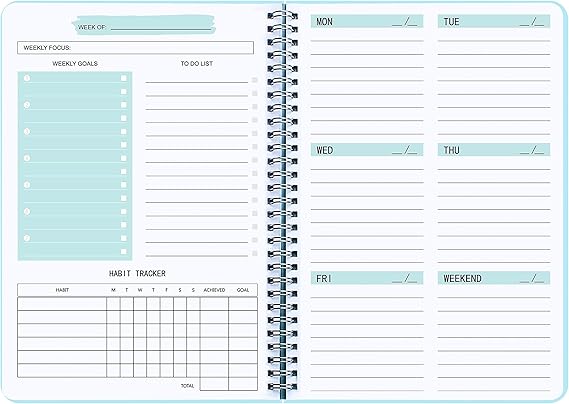
Undated Weekly Planner- Weekly Goals Notebook, A5 To Do List Planner, Habit Tracker Journal with Spiral Binding, 5.7 x 8.0 inches
Digital tools your teen might like:
- MyStudyLife – Tracks assignments, tests, and class schedules
- Todoist – Simple task manager with reminders
- Google Calendar – Ideal for time-blocking and syncing family schedules
Academic materials to reference:
- School calendar with test dates, holidays, and project deadlines
- Class syllabi and assignment sheets (printed or saved digitally)
💡 Tip
Keep everything in one spot—a dedicated study folder or tray avoids wasted time hunting things down.
With these tools ready, your teen’s plan becomes a system, not just a list.
Getting Your Teenager On Board: The Foundation of Success
Even the best study plan won’t work if your teen isn’t part of the process. When it comes to motivating teenagers to study, involvement is everything.
Teens crave independence. If a study plan feels like something being done to them, they’ll resist. But if they help build it, they’re more likely to stick with it.
Start with a conversation, not a lecture:
- Ask what’s been hard lately—focus, time, distractions?
- Listen without jumping in to fix right away
- Share your goal: to make things easier and less stressful, not just to boost grades
Give them real choices:
- “Would you rather study math before dinner or after?”
- “Do you want to use a paper planner or your phone?”
Make it collaborative:
- Build the schedule together, one week at a time
- Let them set reminders, color-code tasks, or add in downtime
Keep the tone low-pressure:
This isn’t about perfection—it’s about progress and control.
💡 Tip
Use short weekly check-ins. Ask what worked, what didn’t, and what they want to change. This keeps them in the driver’s seat.
When your teen sees the plan as theirs—not yours—they’re far more likely to follow through.

Step-by-Step Process to Build a Personalized Study Plan
Creating a personalized study plan means building around your teen’s real life—not forcing them into someone else’s routine. This step-by-step process makes it easy to start small and build a plan that sticks.
We’ll break it down into six simple steps:
- Step 1: Understand your teen’s goals, strengths, and learning style
- Step 2: Map out all time commitments—school, activities, downtime
- Step 3: Estimate how much study time is truly needed
- Step 4: Build a realistic schedule that fits your teen’s energy levels
- Step 5: Add buffer time for breaks, fun, and flexibility
- Step 6: Start using the plan, review it weekly, and adjust as needed
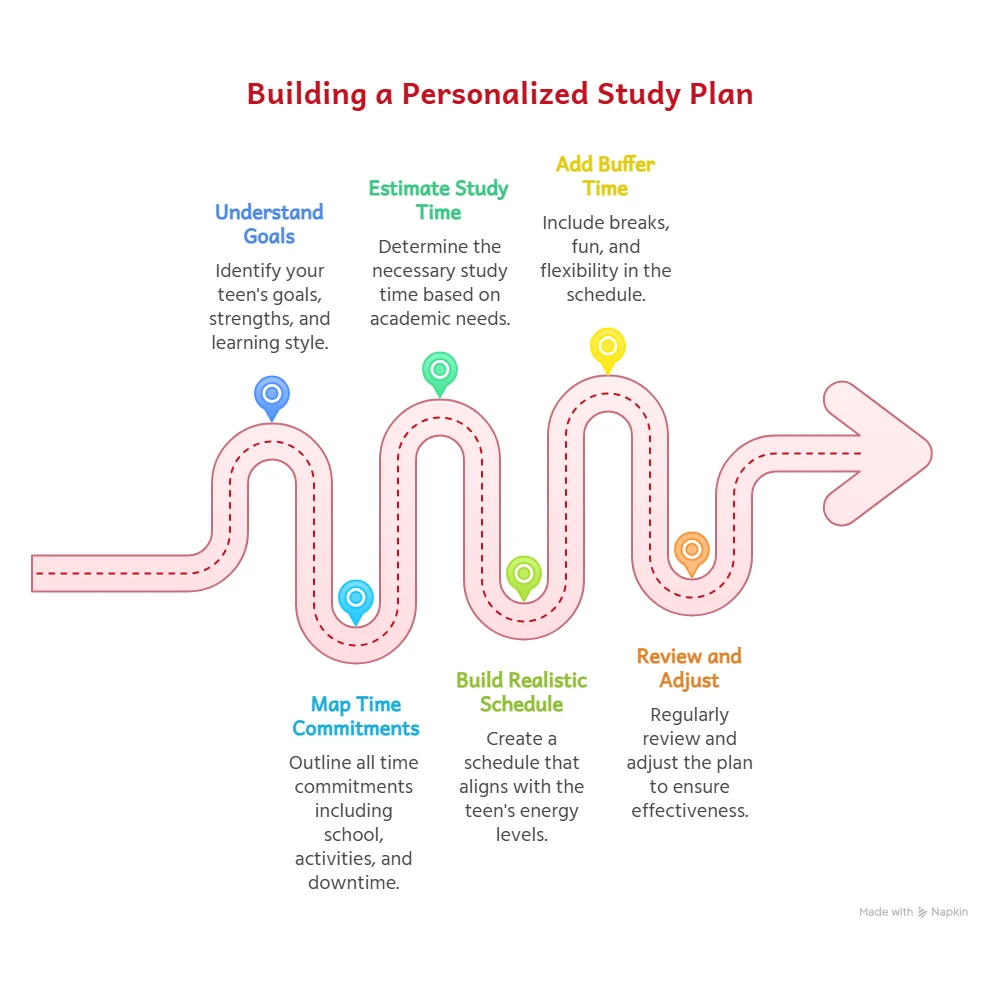
Each step builds momentum—no overwhelm, just progress. Let’s dive in.
Step 1: Assess Internal Factors (Goals, Learning Style, and Study Preferences)
Before building a schedule, you need to understand how your teen learns best and what they’re aiming for. This shapes every other step.
Start by having a simple check-in. Ask:
- “What’s one subject you want to improve in?”
- “What’s your biggest challenge with studying right now?”
- “When do you feel most focused—morning or evening?”
These answers help you align the plan with your teen’s strengths and struggles.
Understand their learning style
Different learning styles in teenagers matter:
- Visual learners need diagrams, color-coded notes, and charts
- Auditory learners do better with lectures, read-alouds, or podcasts
- Kinesthetic learners benefit from hands-on practice or moving while studying
💡 Tip
Use free quizzes like EducationPlanner.org’s Learning Styles Quiz to help your teen identify what fits.
Watch energy patterns
Some teens focus best after school; others do better after dinner. Track their alertness over a few days to find natural study windows.
Review current habits
Observe where they study, how often, and what usually derails them. This insight helps tailor the plan to real behavior—not just what sounds good on paper.
Once you’ve gathered this info, you’ll be ready to build a plan that actually works for your teen, not against them.
Step 2: Analyze External Factors (Schedule, Commitments, and Constraints)
Now that you know how your teen learns, it’s time to look at their weekly demands. Good time management for students means knowing what’s already on their plate before adding more.
Start with a full weekly time map. Include:
- School hours and travel time
- Extracurriculars (sports, clubs, music lessons)
- Family obligations (chores, sibling care, religious activities)
- Free time and screen time (yes, include this too)
💡 Tip
Use a large whiteboard or printable week-at-a-glance sheet. Seeing everything in one place makes overload easy to spot.
Once it’s all mapped out, prioritize tasks:
- Urgent: Due tomorrow, high-impact assignments
- Important: Long-term projects, regular review sessions
- Flexible: Light homework, optional practice
You can also use the Eisenhower Matrix (Urgent vs. Important grid) to help teens decide what deserves their focus.
Look for patterns—are certain days packed? That’s not the time to add new study blocks. Instead, protect lighter days for deeper work.
By analyzing their full week first, you’re setting the stage for a realistic plan that respects your teen’s time—and their energy.
Step 3: Calculate Realistic Study Time Requirements
Once you’ve mapped out your teen’s schedule, it’s time to figure out how much time to study each week—without overloading them.
A good rule of thumb:
30–45 minutes per core subject, 3–5 times a week, depending on difficulty and upcoming assessments.
Break it down by type of task:
- Daily homework: 15–30 minutes per subject
- Quizzes: 2–3 short review sessions (15–20 mins each)
- Tests: Spread review over 3–4 days with 30–45 minute blocks
- Projects or essays: Break into smaller tasks and assign specific deadlines
💡 Tip
Start small. It’s easier to add time later than to cut back when your teen burns out.
Use a basic time calculator (like in Google Sheets or Excel) to total up their weekly study load. Don’t forget to include review time—not just assignments due.
Watch for red flags:
- If a subject consistently takes double the expected time, they may need extra help.
- If a teen finishes too quickly and still struggles, it’s a sign of shallow learning.
Planning realistic blocks helps your teen build confidence, not just complete tasks. This step keeps their study plan doable—and sustainable.
Step 4: Design a Realistic and Flexible Study Schedule
Now it’s time to turn insights into action. Using your teen’s energy patterns, workload, and availability, you can build a weekly study schedule template that actually fits their life.
Start with anchors:
- Add school hours, meals, and activities first
- Identify open blocks of 30–60 minutes on lighter days
- Keep study blocks consistent (same time, same place when possible)
💡 Tip
Match harder subjects to high-focus times (usually late morning or early evening for most teens).
Structure the schedule around types of study:
- Monday/Wednesday: Practice math or science problems
- Tuesday/Thursday: Reading-heavy subjects like history or English
- Friday/Sunday: Light review or project planning
- Saturday: Free choice—catch-up or rest
Use a flexible tool:
- Paper templates work well on a corkboard or planner
- Digital options: Google Calendar, Skedpal, or MyStudyLife
Build in catch-up zones:
Leave 1–2 buffer blocks per week for missed tasks or unexpected work. Life happens—plans should flex.
💡 Tip
Print and post the weekly schedule in a visible spot. Teens are more likely to follow something they see every day.
Designing with flexibility avoids guilt and burnout. Your teen needs space to shift gears without feeling like they’ve failed the plan.
Step 5: Incorporate Breaks And Time For Hobbies and Other Activities
If your teen’s schedule is all work and no play, it won’t last. Building in rest time isn’t a luxury—it’s key to focus and mental health. The study breaks importance is backed by research: short breaks boost productivity and reduce burnout (source: American Psychological Association).
Use the 50/10 rule:
For every 50 minutes of study, schedule a 10-minute movement or screen-free break. This keeps energy up and prevents zoning out.
Plan weekly downtime:
- Weeknights: Add 30–60 minutes for hobbies, music, reading, or chill time
- Weekends: Block 2–3 hours for social activities or creative projects
- No-study zones: Try keeping one evening study-free (like Friday night)
💡 Tip
Treat breaks like appointments. Add them directly into the study schedule so your teen doesn’t feel guilty stepping away.
Avoid passive screen time as the only break—encourage stretching, sketching, or a short walk to refresh their mind.
Helping your teen build balance makes the plan more sustainable. A schedule that honors their interests and energy is one they’re much more likely to stick with.
Step 6: Implement The Study Plan And Revise If Needed
The key to implementing a study plan is starting small and staying flexible. A perfect plan on paper won’t help unless it works in real life.
Start with a 7-day trial run. Use a whiteboard, calendar, or app to follow the schedule and track what actually happens.
What to watch for:
- Are time blocks too long or too short?
- Is your teen avoiding certain subjects or tasks?
- Are they finishing early or constantly behind?
Tip: Use a simple feedback loop each Sunday:
- What worked?
- What felt too rushed or unrealistic?
- What do we want to try differently next week?
Make small tweaks:
- Shift time blocks based on energy
- Reduce overload on heavy days
- Move breaks if they’re not refreshing
Tools like Habitica or Sunsama help teens reflect on progress with quick daily logs.
Stay supportive, not rigid:
Study plans should grow with your teen. Exams, new interests, or stress will shift priorities—and that’s okay.
A flexible plan your teen helps revise will always work better than a rigid one built without them.
Conclusion
Helping your teen create and stick to a study plan isn’t just about academics—it’s about building skills that shape their future. With structure, realistic goals, and a little trial and error, you’ll see less stress, more confidence, and real success with your study plan.
It won’t be perfect overnight. There might be resistance, missed blocks, or weeks that don’t go as planned. That’s normal. The key is to stay patient, review the plan together, and keep adjusting based on what works.
Start small today: Sit down with your teen and map out their week. Just that one step makes a difference.
Remember, every small step toward better study habits is progress worth celebrating. You’ve got this, and your teen will benefit from the calm, supportive foundation you’re building.
You’re not alone in this parenting journey. For more help with screen-time limits, check out How Much Screen Time Is Too Much for your Kid?, or explore Effective Strategies To Improve Your kid’s Reading Comprehension Skills for next-level support.
I hope this helps you handle study planning more confidently—and with a little less stress at home.
Frequently Asked Questions
How often should a study plan be reviewed and adjusted?
A study plan should be reviewed weekly, with more detailed adjustments made monthly or at the start of each school term. Weekly reviews help catch small issues before they grow—like missed blocks, rising stress, or changing priorities.
Weekly Check-Ins
At the end of each week, sit down with your teen for 10–15 minutes. Ask what worked, what didn’t, and where they struggled or felt rushed. Adjust the schedule slightly to better fit their real-life energy and workload.
Monthly or Term-Based Adjustments
Larger changes—like switching up study subjects, shifting routines, or rebalancing academic vs. extracurricular time—should happen once a month or at the start of a new grading period. This keeps the plan aligned with shifting school demands.
Warning Signs to Watch
Frequent missed sessions, falling grades, late nights, or frustration are signs the plan needs a reset. If your teen feels overwhelmed or constantly “behind,” it’s time to rework the layout.
Start with a weekly check-in this Sunday. A few small shifts now can prevent burnout later.
What if my teenager won’t follow the study plan?
If your teenager won’t follow the study plan, it usually means the plan doesn’t fit their reality—or they don’t feel ownership over it. Instead of starting over from scratch, take a step back and troubleshoot what’s not working.
Look for the Root Cause
Teens may resist plans that feel too rigid, unrealistic, or top-down. If your teen feels overwhelmed, under-motivated, or like the schedule was made for them—not with them—they’ll likely ignore it.
Start a Reset Conversation
Have a calm, judgment-free chat. Ask your teen what parts of the plan felt hard, annoying, or pointless. Keep the tone collaborative, not corrective. Sometimes just swapping study times or shortening blocks makes a big difference.
Make the Plan More Personal
Let your teen pick their own study times, tools, or location. Add breaks for hobbies or social time to increase buy-in. Even a small win—like finishing a 20-minute block—can help rebuild momentum.
Know When to Revise
If the plan has failed for two weeks straight, don’t keep pushing. Rewrite a smaller, simpler version based on your teen’s current bandwidth.
Start fresh with one realistic goal for this week—and build from there.
Digital vs. paper planners: Which works better for teens?
There’s no one-size-fits-all answer—both digital and paper planners can work well for teens, depending on their personality, tech habits, and organizational needs.
Digital Planner Benefits
Digital tools like Google Calendar, MyStudyLife, or Todoist are great for tech-savvy teens who prefer typing, use reminders, and sync across devices. They work especially well for teens who are already managing school through apps or Chromebooks.
Paper Planner Benefits
Paper planners or printed templates are ideal for visual learners who like writing things down. Teens who are easily distracted by screens often find paper keeps them more focused and in control of their schedule.
Choose digital if your teen is already comfortable using calendar apps, likes checklists, or benefits from notifications and automatic syncing.
Choose paper if your teen enjoys journaling, doodling, or color-coding by hand—and prefers to see the whole week laid out at once without a screen.
Try both formats for a week and see what sticks. The best planner is the one your teen will actually use.
How can I keep my teenager motivated long-term?
To keep your teenager motivated studying, focus less on pressure and more on progress, purpose, and ownership. Motivation isn’t constant—it’s built through routine, feedback, and small wins over time.
Tie goals to real-life outcomes
Help your teen connect studying to what matters to them—getting into a preferred college, qualifying for a team, or having more free time later in the week. Clear reasons drive lasting motivation.
Use short-term rewards to reinforce habits
Offer simple incentives like extra screen time, a weekend outing, or a late start on Sundays when they complete their plan for the week. Keep it consistent, not extravagant.
Switch up the routine
Monotony kills motivation. Let your teen try new study spots, use music for review, or schedule themed days (like “Math Mondays” or “Read + Chill Fridays”).
Track effort, not just results
Use a wall calendar or tracker to mark off completed sessions. Visual progress builds internal motivation even when grades take time to improve.
Expect dips—especially around exams, holidays, or big transitions
Revisit the plan each month to refresh goals and reset expectations.
Stay flexible and involved. Motivation builds slowly, but it sticks when teens feel supported, not pressured.




Leave a Reply